
How much Did it cost to live in Japan?
I lived in Japan for 4 months for my study abroad term. Now during the time I was here the yen had dropped way weaker than it has historically been, so for me as an American, things were relatively cheap. At one point, the yen fell to be 160¥=$1 when say ten years ago it was roughly 100¥=$1. This was great for me, as well as my friends from Paris who were used to the strength of the Euro. This unfortunately meant things were more expensive for the Japanese. Still, I really could not afford to go on a wild spending spree while in Japan. I managed to get one scholarship from my home school, that honestly went straight towards my airline ticket. I also got a monthly stipend from Tsuda of 37,500¥ or roughly $247. The rest of the time here I used the money I had saved from work, my parents supported me when they could, and it was honestly through the generosity of friends and some family that I was able to make do for 4 months. And that I am EXTREMELY grateful, because I feel guilty asking people for money.
I made sure to carefully budget while here. When I first got to Japan, my expenses were definitely WAY higher, because I had to buy a bunch of things for the dorm, like kitchen supplies and groceries. As time went on, it wasn’t as expensive for me, but I still tried to be careful about my spending yet still trying to have fun in Japan and buy the things I want. I will admit, at times I did feel guilty about buying so many souvenirs and stuff I wanted, because I truly didn’t want to blow through all my money so quickly. I know it was a challenge for me, so I really want to be realistic and honest about how much it costs to live here for me, and so hopefully any future travelers can plan accordingly. Also do note, during this time, I was also not working. I technically could work with my visa, but it was kinda hard to find a part time job that could work with my class schedule and with my limited Japanese.
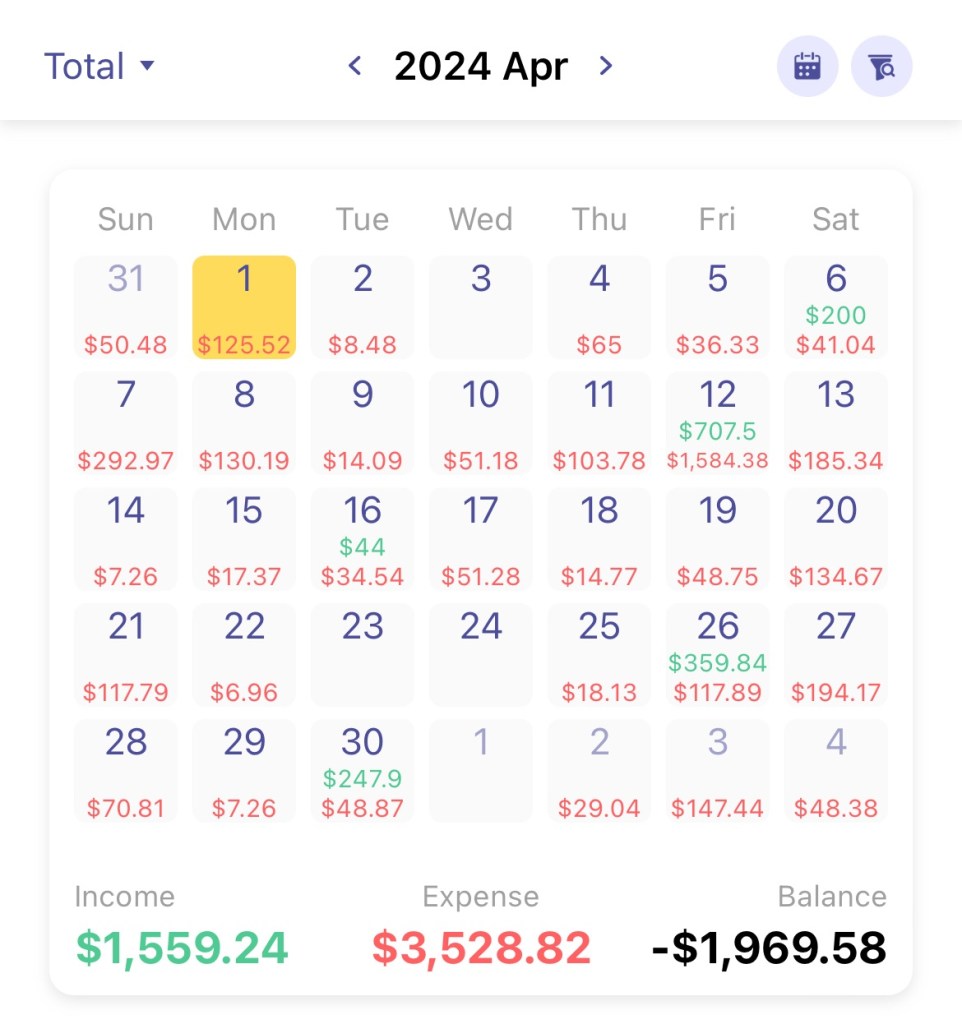
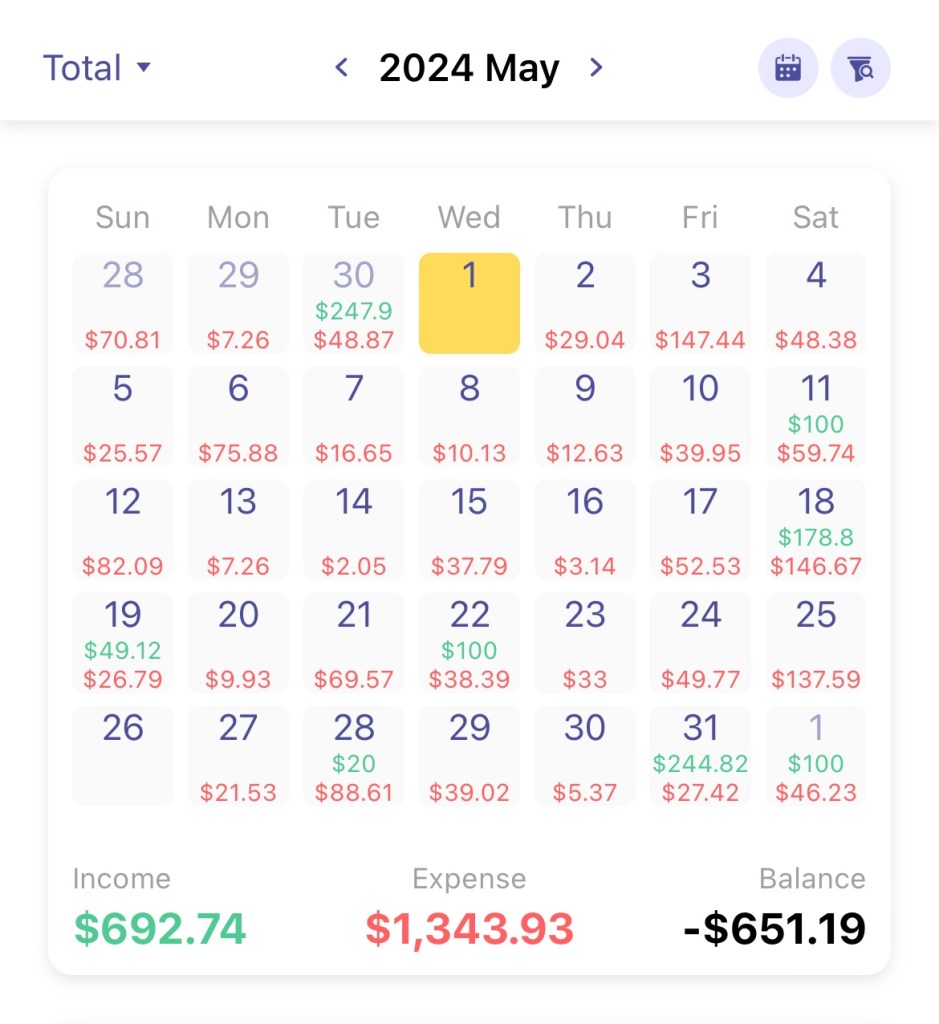
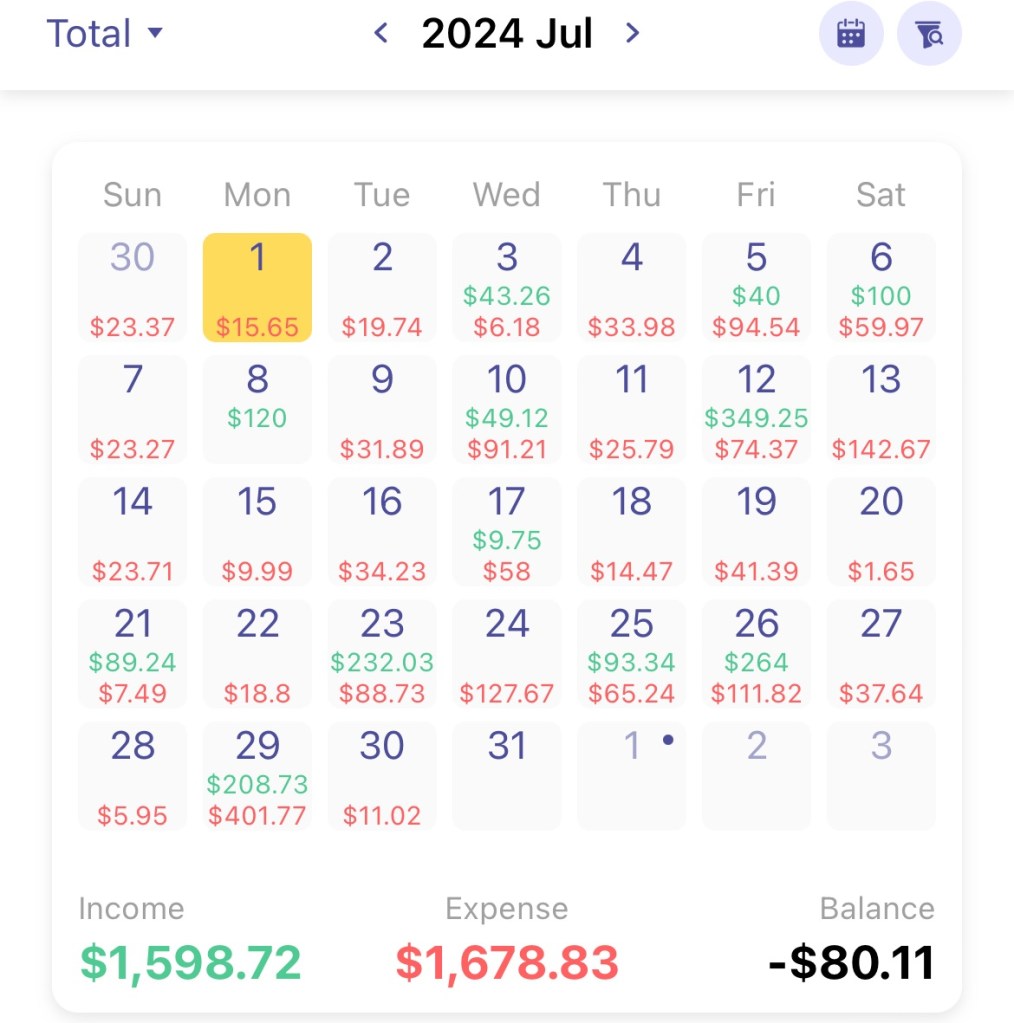
I used a budgeting app while out there. What I liked about this app was that I could categorize my spending such as food, transportation, etc. I could also add bank accounts and track which account money was coming from and going into. You can also change the currency, so I could input yen and convert it to the dollar. I didn’t use this feature, but you could also create a monthly budget. The app will then tell you whether you go over what you set. The only thing that was annoying with the app is that with each month, it sort of reset. So it treated it as if each month you had no money even if you had some cash left over.
Now, April definitely was my most expensive month, because I had to pay dorm fees. That’s why that number was so much higher than the rest of the time I was here. That time was like moving into a new house as well, so I had to buy kitchen supplies like pots, pans and cooking utensils, my grocery bill was the highest since I had nothing, and I was really trying to adjust to my new environment. But, during this month, I also still got a couple paychecks from my job. My last day at work was April 4th, so I got I think two more paychecks that month. After that, my expenses dropped significantly and things got a little bit easier to budget.
July surprisingly also ended up being an expensive month for me, but that’s because I had to buy another suitcase to get things home and I also had to mail 3 boxes of stuff that wouldn’t fit in my bags. Also near the end, I stopped cooking, because I was ready to go home, and I was eating out at 7/11 for every meal. lol
Now, my 3 top expenses were food, transportation and personal, which included things like shopping and buying souvenirs. Grocery shopping wasn’t really that expensive in Japan. On average, I spent maybe anywhere between $20-$40 for a week’s worth of groceries for myself. Eating out wasn’t that expensive either. My favorite coffee from 7/11 was 138¥ or $0.98 and an onigiri may be 121¥. So realistically, the cost of living for me was not that expensive, but the fact that I was not working made money pretty tight.
Transportation and reloading my Suica card on my phone was probably my second biggest expense. What was difficult about my transportation card is that I often had a lot of physical cash, because I would withdraw a lot from the ATM to avoid using my debit card. I didn’t want to have a lot of international fees on my card, which is why each time I went to the ATM, I made sure to withdraw a large amount of cash at one time so I didn’t have to keep going back. That meant I didn’t always have money in my bank account, so sometimes I had to ask my parents for maybe $20 to reload my card. And what I would do was put a lot on my card at once so that I didn’t need to keep recharging it.
The train is relatively inexpensive. To go from the closest station near my school to Kokubunji, which I frequented often cost 160¥. Going to Shinjuku may be a 500¥ trip and then another 500¥ coming back. Again, it’s not that expensive, but going several times back to back adds up. And when you’re not working, you’re spending more money without adding it back. At times it was extremely difficult to be honest. Sometimes, I’d skip out on going out with friends and stayed relatively close to campus to save some extra money.
In total my trip was about $7,600 give or take. Maybe closer to $9,000 if we include my round trip flight of about $1600. My hotel for the one night I stayed before moving into the dorm was about $90. So, if you’re traveling to Japan as an American and even as a European (because the according to my friends from France, the Euro was stronger than the yen too), it’s honestly not that expensive. Your biggest expenses will be:
- Airline ticket (if you’re flying from different parts of America/the rest of the world, it may be cheaper. Example, a classmate. took a quick trip to South Korea from Japan and the roundtrip was around $350)
- Eating out
- Hotel
- Souvenirs & Activities
I didn’t stay at a hotel very long, so I can’t give an accurate estimate for how much it would cost for a say 2 week stay, but I would assume if you stayed closer to Tokyo, like Shinjuku or Shibuya, then the cost will go up. Also, if you travel in early Spring or during Golden Week, which is the first week of May, prices increase exponentially because that’s peak tourist season.
There are definitely ways to save up on money, like shopping around for airline tickets and hotels. If you’re studying abroad in the future, I’d definitely make sure you come prepared with a means to support yourself while in another country. It’s definitely not easy, and there are some things you just won’t be able to do. I wanted to take a trip to Osaka, but I just didn’t have the extra money to pay for a hotel. What really gets you is the fact that you’re not working. Definitely by the end of the summer, all of us were penny pinching and trying to make our last few yen stretch. I’m not sure honestly what I would have done if I was staying for a year.
I did all that I could to prepare to the best of my ability for my program and I tried to be as smart as I could while budgeting to watch my spending habits. I’m grateful to my family and friends who did help while I was out here. They definitely didn’t have to, but it was through their support that I was able to have one of the most memorable summers of my life.




One response to “Japan Cost Break Down”
-
I didn’t care how much it was going to cost I wanted you to go and I’m glad the experience was more than you could ever hope for. The doors it will open up for you will be nothing short of amazing! I had you then and will have you going forward. 💜😘
LikeLike


 Gakusei Travels
Leave a reply to tlgaines2023 Cancel reply