
買い物に行きましょう
Yesterday was surely a long and draining day. At Tsuda, students mostly cook and prepare their own meals, so I needed to go to the grocery store. I can’t afford to keep eating out every meal lol. My classmate from my home university, Sam, and I decided to go shopping together.
I first started my day off attempting to do laundry. That was the start of my frustrations, because I had no idea how to use the machines. (;_;)Every time I went in there, there were no other students. I should have just texted one of my Big Sisters or flagged down another student for help. I ended up figuring the washer out pretty easily, but the dryer had me so confused. I “dried” my clothes for an hour and they still came out wet. In Japan, most people hang and air dry their laundry. On the terrace outside of the laundry room, there is a place to hang your clothes, but I haven’t bought any hangers or clips. I’m very stubborn and was very much determined to figure it out on my own. I ended up googling “how to use Japanese washing machine” and eventually found a website that explained what the buttons said on different appliances. I was then able to dry my clothes, but it took longer than necessary.
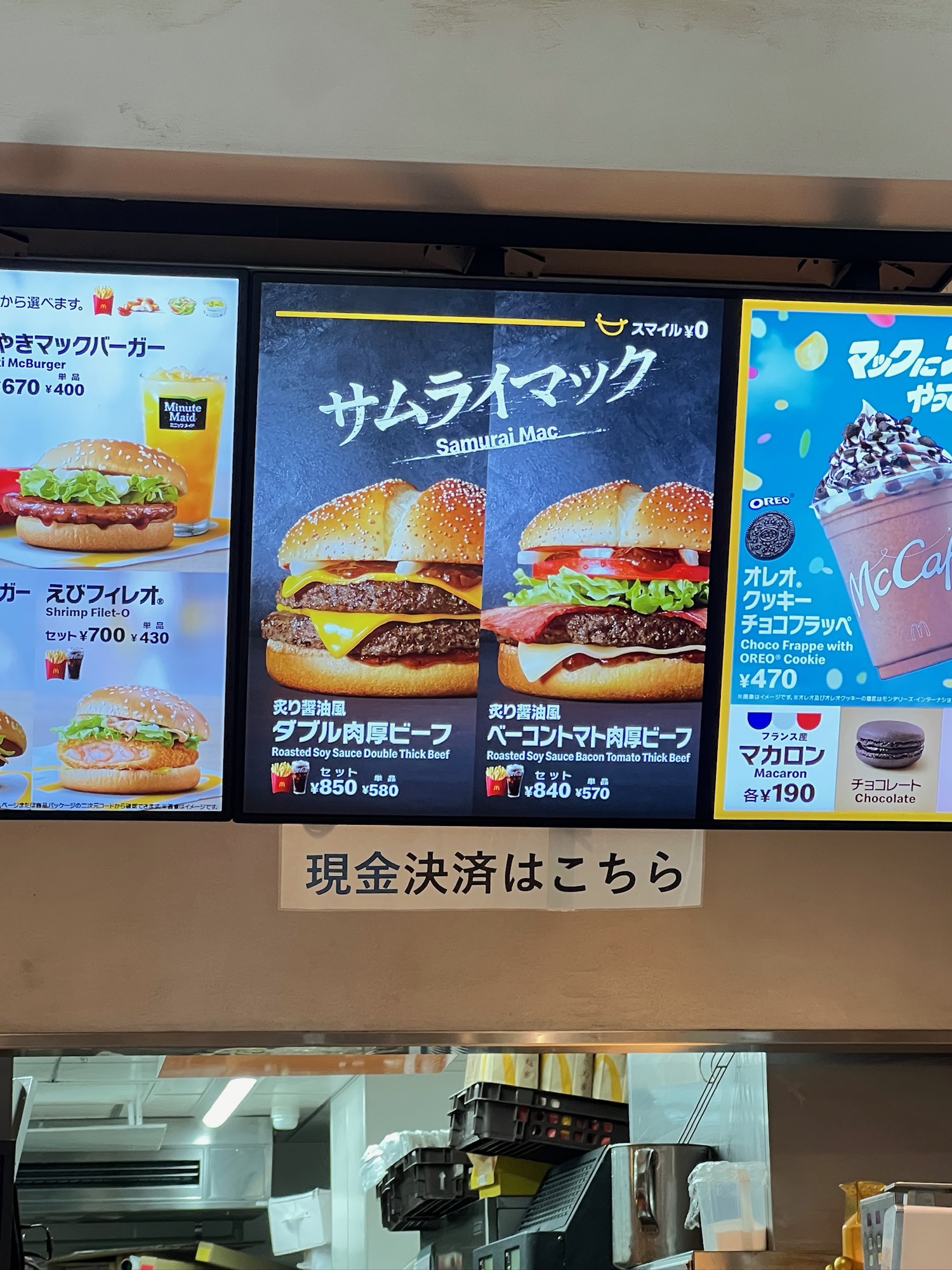
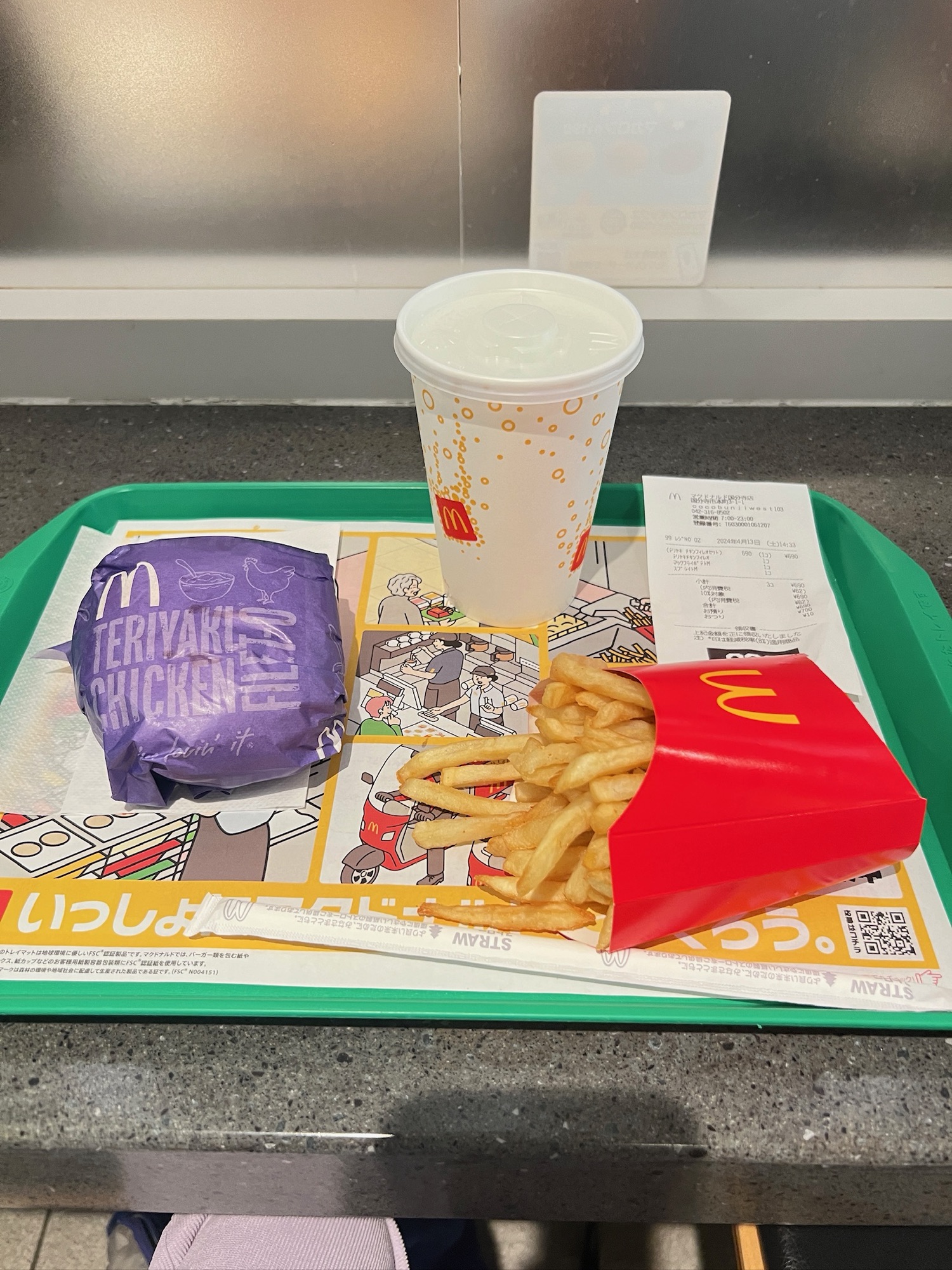
Most of the shopping Sam and I needed to do was in Kokubunji. I finally got the Suica Card downloaded to my iPhone, so I could reload money to ride the train instead of always having to buy a ticket. I’m pretty much a pro now at getting from Tsuda to Kokubunji. It was around 2 PM, so we decided to get lunch, and what better place to get lunch than McDonald’s? ( ^ω^ )lol. In reality, we just wanted to see how it was different from America. The menu is fairly different. There were a couple similar things, such as a Chicken Fillet and a Big Mac, but most of the flavors and sauces differed from America. It’s like the brand is just used in name. I ended up getting a Teriyaki Chicken Fillet meal. It was pretty good and would recommend. Just make sure you have hand sanitizer or something, because the sauce makes your hands sticky and the napkins aren’t the same paper-type material we’re used to in the states. It’s weird, and I don’t really know how to explain it. Also, be sure to sort your trash properly between paper and plastic! Trash sorting is big here. If you aren’t sure, just ask one of the employees.
There’s what I consider a shopping mall here in Kokubunji by the train station. There are several floors with various shops, cafes, and restaurants. Sam wanted to visit Uniqlo, which is a popular clothing store here in Japan. She’s on a quest to find pleated skirts, so wish her luck! We’ve yet to find any. I saw a couple T-shirts and a dress I liked, but I’m not sure if I’m sold yet. I will be here for 4 months, so I’m trying not to impulse-buy (I will end up regretting these words later on(・∀・)). We’ve stayed relatively close to campus the first week here, so I haven’t gotten the chance to go see some of the cities I really want to, Harujuku, Shinjuku and Shibuya. The other tricky thing is trying to figure out what size clothes I wear here. I don’t know the size conversion scale yet. In most women’s clothing back in America, I can usually wear a small or medium, but in Japan, I think I have to get a large. I will figure it out eventually through the help of Google.
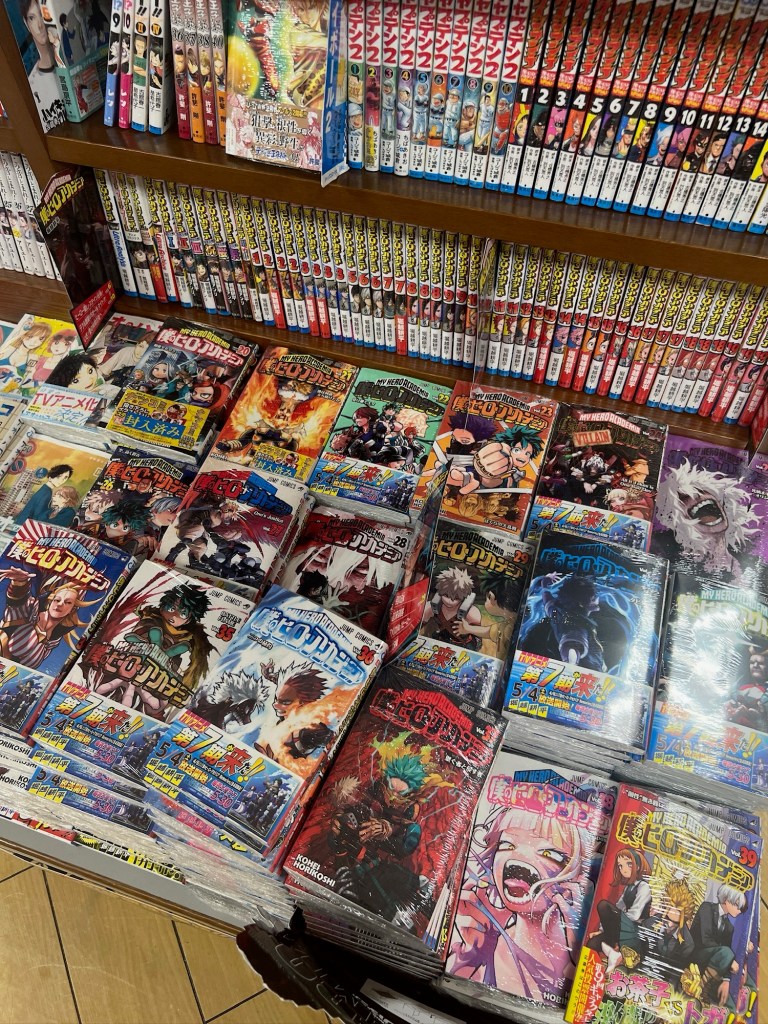
After not finding anything in Uniqlo, Sam and I just had to go to Kinokuniya. It is basically the equivalent to a Barnes and Noble here in Japan. In America, there are some Kinokuniya locations, but they’re in major cities like Chicago and New York. I did visit the Los Angeles, Little Tokyo Kinokuniya during my summer 2023 internship, but the one in LA did at least have some English books. The one in Tokyo was so cool to me. Sam and I, me especially, went a little overboard on buying books. Sometimes, in America, certain volumes aren’t released yet due to them not having been translated yet. So it may take an extra few months to a year to read the next edition of a series you really like, because it’s not released yet. I saw many volumes of series that aren’t out yet in America. For example, I saw volume 38 of My Hero Academia in Japan, but in America, volume 38 doesn’t release until June 4th, 2024. Manga is also a lot cheaper here! Most volumes I picked up were around 450-500¥ which is around $2.94-3.26. I ended up with 24 books. Some of the other customers thought it was funny, and I don’t really blame them. I was circling the store with an armful of books. I actually ended up with so many books that the employee told me that the barcodes can be used for coupon points at Tokyo Disney. So a win is a win.
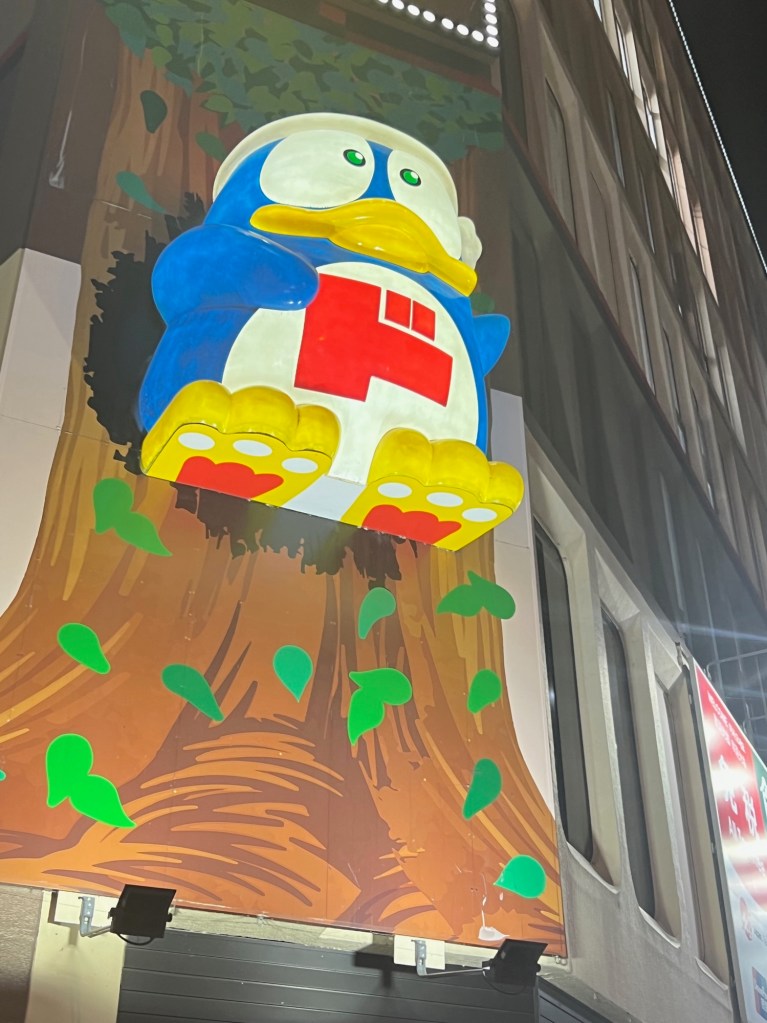
Lastly, we finished our shopping adventure at the デパート(department store.) Sam I first went to a grocery store called Seiyu, but they didn’t really have what we needed, so we took the train to Tachikawa and went to the Mega Don Quiote. If you are someone who gets easily over stimulated, like myself, I would recommend you bring headphones or something. Mega Don Quiote is the most overstimulating place I’ve ever been in with all the lights, music, big signs and too many things to see. The place is so big with 7 floors that each have different things from produce, to household appliances, to sports gear, to party supplies. Literally everything you could possible need is in this store. It puts Walmart and Target to shame! I felt like my head was spinning trying to look at everything. I still don’t really comprehend how much yen is in comparison to the USD, so I can’t really say if stuff was expensive or not. In total, for a bunch of groceries, I spent 14,089¥ or $91.92, which isn’t bad since I’m just cooking for me.
One thing I have learned from shopping is to ask for help. Sam is quick to ask for directions, but I also want to try to figure it out and end up getting frustrated quickly. The week itself has been very overwhelming, since I’m out of my comfort zone. I’ve been having fun in Japan, but everything is so new to me and I feel like I’m relearning how to do a lot: how to use a laundry machine, how to get to the grocery store, how to find things in the store. It’s a frustrating process, because I haven’t found a routine, and I’m someone who likes to have one. Everything has been a learning process so far, so I’m learning how to be patient with myself. It’s new, and I’m the first person in my family to leave the country. So taking that first step alone is a big deal and something to be proud of.




All the books I bought…
All 10 volumes of A Sign of Affection and
All 14 volumes of A Condition Called Love cost 13,090¥
In total I spent around $85 where as in America, A Condition Called Love costs $10.99 each and A Sign of Affection costs $13.99. In my head, I saved money. ƪ(˘⌣˘)ʃ
I also got the little Rin Itoshi from the anime Blue Lock from a gachapon machine. Those are in a lot of stores. You put coins into the machine, crank it, then a little ball comes out of it with a random prize.
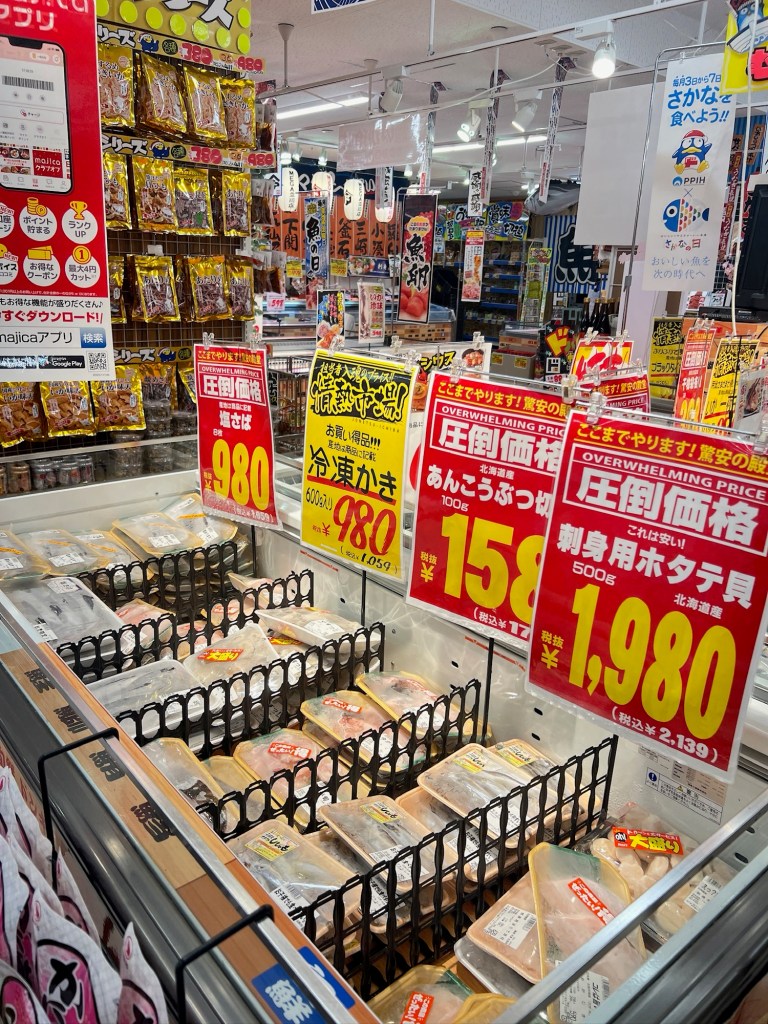

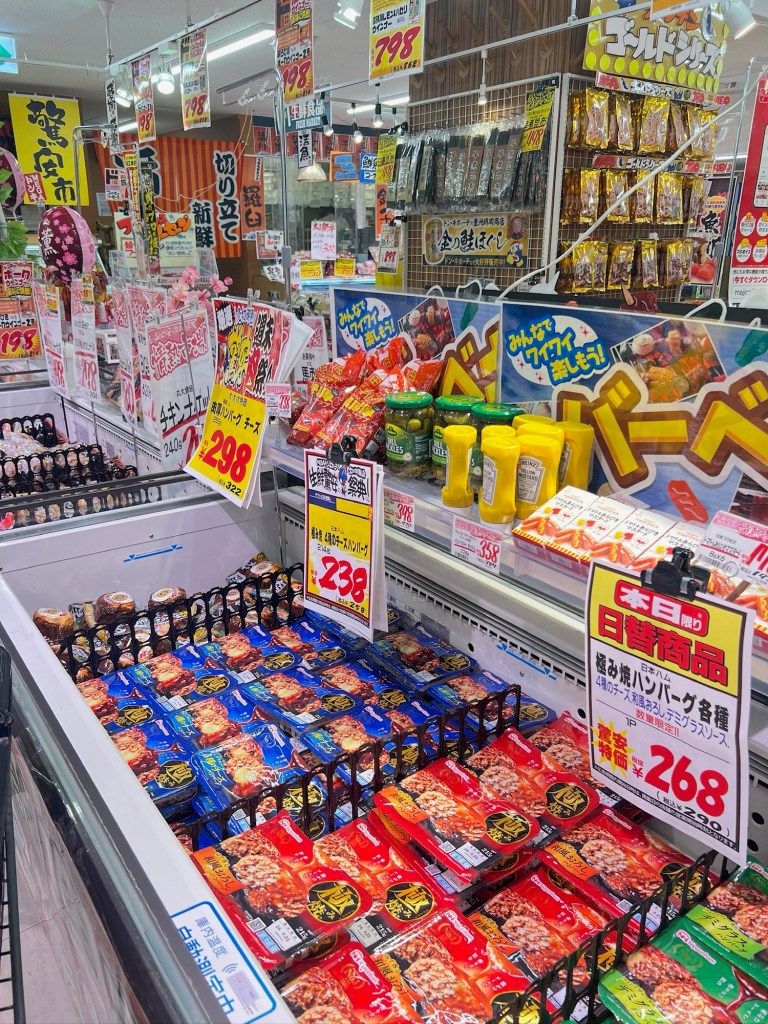

カルチャーショック!! (・Д・)
Trash Sorting
I mentioned this a little earlier about my adventure in McDonald’s but here in Japan, everyone sorts their trash. Trash is sorted by burnable/combustible, non-burnable, and plastic. In the dorms at Tsuda, the kitchens have several bins for you to sort your trash even further. For example, if you have an empty water bottle, you can’t throw it away in the plastic bin. You have to first peel the label off of the bottle. It’s easy to do here. The label goes in the plastic bin, the bottle cap goes in the cap bin, and the bottle itself goes into the ペットボトル (pet bottle) bin.
At McDonald’s my drink cup went in the paper bin, but the plastic lid went into plastic. It can be tricky sometimes, especially cause in America, most people don’t even recycle. I’ve had to ask for help a few times to make sure I’m disposing of my trash correctly. Each city has their own special city-issued trash bags that you use to throw away your things. There is a trash sorting calendar on campus which shows which days what trash is collected and how to sort it. The tricky thing is that from city to city, the trash sorting can be totally different! You also won’t find many trash cans in the city.
2 responses to “Grocery Shopping in Japan”
-
Trash isn’t sorted / separated in America?
Isn’t recycling done there?
You wrote about culture shock in Japan…I wrote about reverse culture shock in America:
LikeLike
-
Trash isn’t sorted in America. You can recycle but often times you have to pay extra to do so, because you have to pay for the recycling company to come to your house. So most Americans don’t bother at all. Most people recycle incorrectly too and don’t take the time to sort plastic from paper from cardboard.
-


 Gakusei Travels
Leave a reply to tokyo5 Cancel reply